4-Part Session Structure for Developing Explosive Young Soccer Players
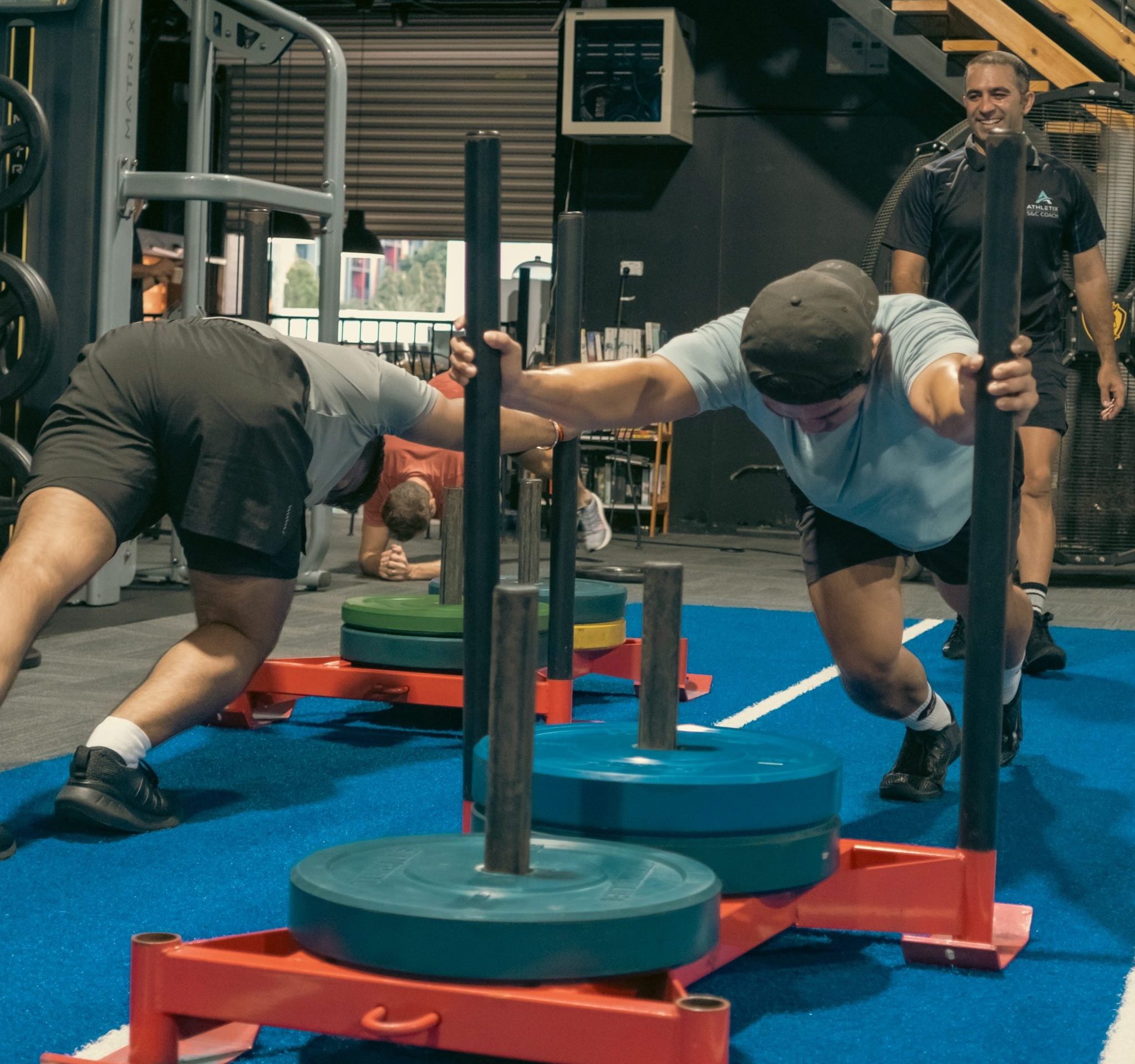
Young soccer players need more than random drills, endless small-sided games, or the same generic warm-up every session. Their physical development—explosiveness, strength, mobility, and the resilience that keeps them available—requires deliberate structure. At Athletix, every session for young soccer athletes follows the same four-part logic. Nothing is random. Everything has a purpose.
The sequence is simple but powerful: Prep (mobility), Bloc 1 (jumps), Bloc 2 (heavy lifts), and Bloc 3 (injury prevention). This order places high-skill, high-intent work first while the nervous system is fresh, builds strength next, and finishes with the work that protects players across a long season. Common faults in youth training include treating the warm-up as filler, jumping straight into heavy loading, or ignoring prevention until something breaks. This structure corrects those issues by addressing each quality in the right window and individualizing every program to the player’s age, level, and calendar.
1. Prep: Mobility — Develop, Don’t Just Warm Up
Purpose: Prepare the body to move better under load and on the pitch by targeting each player’s tightest areas.
We don’t just warm up. We develop mobility. Each player receives specific work on their limitations so joints and tissues move more effectively under load and during game demands. An athlete with restricted ankles, for example, gets targeted ankle work so dorsiflexion improves for deceleration, cutting, and acceleration rather than compensating through the knee or hip.
Key coaching points:
- Assess and individualize rather than running identical routines for the whole group.
- Prioritize active, loaded mobility—controlled articular rotations, banded end-range holds, or light resistance through the available range.
- Keep it short and purposeful (typically 5–10 minutes) with clear intent on the positions that transfer to soccer.
- Emphasize quality positions over passive stretching so the session starts with better movement capacity.
Prescription: One or two targeted drills per player or small group, 8–12 controlled repetitions or 20–40 second holds. The goal is improved range that the athlete can actually use once the main work begins.
Athletes who enter the session with better mobility produce force more efficiently and reduce the compensatory patterns that lead to overload later.
2. Bloc 1: Jumps — Build Explosiveness While Fresh
Purpose: Develop power and landing control when the nervous system is at its freshest.
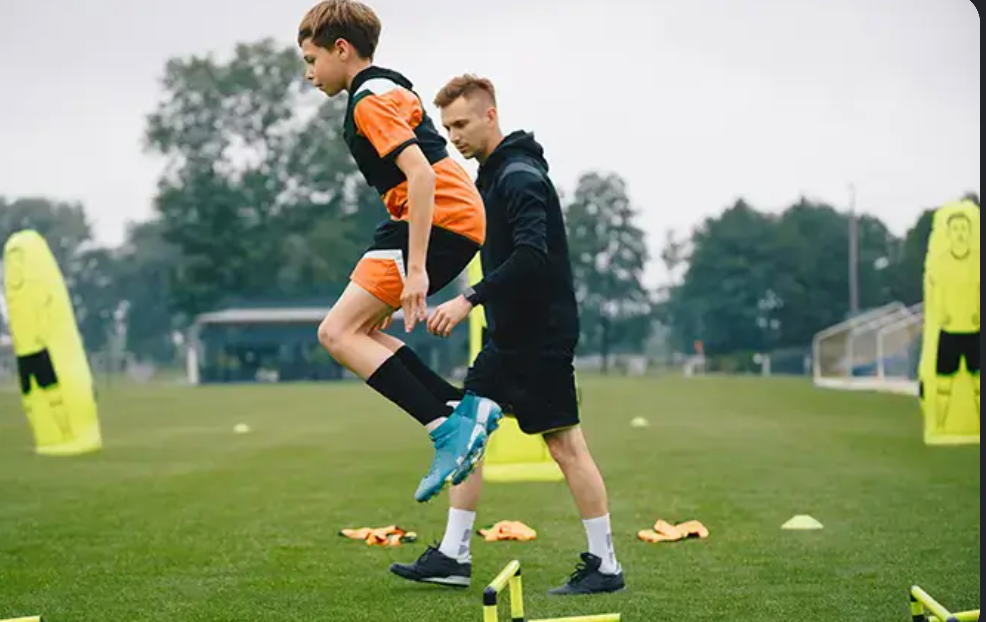
Various jump patterns come first—vertical, horizontal, single-leg, and controlled landings. This is where explosiveness and the ability to absorb force get built. Placing jumps early allows athletes to express high intent without fatigue dulling the signal or technique.
Key coaching points:
- Prioritise quiet, athletic landings with knees tracking over the toes and the hips absorbing load.
- Progress patterns based on competency: bilateral vertical jumps first, then unilateral, multi-directional, and eventually reactive variations.
- Cue full intent on takeoff (“explode”) and control on landing (“stick”) rather than chasing volume.
- Keep total foot contacts moderate so quality stays high and the work remains power-oriented rather than conditioning.
Prescription: Three to five sets of four to eight jumps per pattern with full recovery between sets. For most youth sessions this keeps total contacts in a manageable range so athletes leave the block sharper, not fatigued.
Players who master this block jump higher, change direction more cleanly, and reduce soft-tissue stress when they return to the pitch.
3. Bloc 2: Heavy Lifts — Build Real Strength
Purpose: Develop the strength that makes players faster, more robust in contact, and better at changing direction.
Strength work uses real loads adapted to the athlete’s age and level. Stronger players sprint faster, change direction better, and handle contact better. For youth this means progressive loading with excellent technique—goblet squats, trap-bar or conventional deadlift variations, split squats, and appropriate press patterns—rather than maximal adult-style lifts.
Key coaching points:
- Technique first, load second. Master the pattern before adding weight; use pauses or tempos if needed.
- Scale to maturity and experience: younger athletes emphasize bodyweight or light external load with high movement quality; older youth progress toward moderate-heavy loads in the 5–8 rep range.
- Favour compound lower-body and full-body patterns that transfer to soccer actions.
- Allow full recovery between sets so each effort remains high quality.
Prescription: Three to four main lifts, three to four sets of five to eight repetitions (or age-appropriate ranges), using loads that challenge while preserving perfect form.
This block creates the force foundation that jumps, sprints, and on-field duels rely on.
4. Bloc 3: Injury Prevention — The Work Nobody Sees
Purpose: Build resilience in the areas that keep a player available all season.
Hamstrings, adductors, hips, ankles, and core receive targeted work. It is the work nobody sees on the pitch, but the one that keeps a player available all season. Placed last, the key muscles are already warm and activated from the previous blocks, allowing higher-quality contractions without starting from cold.
Key coaching points:
- Address soccer-specific risks: Nordic or single-leg variations for hamstrings, Copenhagen or side-lying work for adductors, single-leg balance or band work for ankles, and anti-rotation patterns for the core.
- Emphasize controlled, higher-rep or isometric efforts that build tissue capacity.
- Individualize based on screening or injury history so previous problem areas receive extra attention.
- Finish with quality rather than fatigue so players leave prepared, not depleted.
Prescription: Two to three exercises, two to three sets of eight to twelve repetitions or 20–40 second holds. Rotate variations across the week to keep the stimulus fresh.
Putting the Structure into Practice
A typical session flows like this:
- Prep: Individualised mobility (5–10 minutes)
- Bloc 1: Jump patterns focused on projection and landing control (10–15 minutes)
- Bloc 2: Main strength lifts with progressive, age-appropriate load (15–20 minutes)
- Bloc 3: Targeted prevention for hamstrings, adductors, hips, ankles, and core (8–12 minutes)
Keep total volume moderate, especially with younger athletes. Quality of movement always comes before quantity. Rest fully between high-intent efforts so technique does not break down. Every program is individualised to the player’s age, level, and calendar—match days, growth spurts, and recovery needs dictate exact loads and volumes.
Why this order?
Fast and technical work first, heavy work next, prevention last when the key muscles are already warm and activated. The result is sessions that develop explosive, strong, mobile, and available young soccer players—session after session. This simple sequence addresses the most common gaps in youth soccer physical preparation by building each quality in the optimal window. Players who train this way become more powerful on the ball, more resilient in duels, and more consistent across a long season.